The 5 Best Engagement Ring Settings
A beautiful diamond needs the right setting. The setting decides how much light reaches the stone, how secure it is, how practical the ring is to wear every day, and how big the diamond looks on the hand. Here are five of the most popular engagement ring settings, with the pros and cons of each.
First, two terms you will see often: the shank is the band that goes around the finger, and the head (or gallery) is the part that holds the diamond.
1. Solitaire setting

A single diamond on a plain band, usually held by four or six prongs. It is the classic choice: simple, timeless, and it lets as much light as possible into the diamond.
Pros: maximum sparkle, easy to clean, pairs with any wedding band. Cons: a high-set stone can catch on clothing, and prongs need checking every year or so.
2. Halo setting
The center diamond is surrounded by a ring of small diamonds. This makes the center stone look noticeably larger and adds extra sparkle.
Pros: big look for the budget, very bright. Cons: more small stones to maintain, and the style is harder to resize.
3. Pavé setting
Small diamonds are set closely along the band, held by tiny beads of metal, so the band itself sparkles.
Pros: elegant and very sparkly. Cons: small stones can loosen over time, and resizing is limited.
4. Bezel setting

A thin rim of metal wraps around the diamond instead of prongs. It is popular with people who use their hands a lot, such as nurses, athletes and anyone with an active job.
Pros: the most secure setting, protects the diamond’s edges, modern look. Cons: covers part of the diamond, so it can look slightly smaller and show a little less sparkle.
5. Invisible setting

Small, usually square diamonds are set edge to edge with the metal hidden underneath, creating a smooth surface that looks like one large diamond.
Pros: striking, continuous sparkle. Cons: expensive to make and repair, and a hard knock can loosen a stone.
Setting vs shape: don’t mix them up
The setting is how the diamond is held. The shape is the outline of the diamond itself. Any of the settings above can hold any shape. Two popular shapes:

Princess cut: a square shape with lots of sparkle, usually priced below a round diamond of the same weight. Choose a setting that protects its pointed corners.
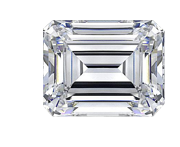
Emerald cut: a rectangular shape with long, open step-cut facets that give a clean, mirror-like flash rather than intense sparkle. Those open facets make inclusions easier to see, so clarity matters more than with a round diamond.
How to choose
- Active lifestyle: bezel or a low-profile solitaire.
- Want the diamond to look bigger: halo.
- Love sparkle everywhere: pavé or halo.
- Timeless and simple: solitaire.
Related guides
- How to buy a solitaire engagement ring safely
- Best diamond shapes for your hands
- Diamond engagement ring buying guide