What Is the Price for 1 Carat Lab Grown Diamond?
If you have started comparing engagement rings online, you have probably asked: what is the price for 1 carat lab grown diamond? The short answer is that most 1 carat lab-grown diamonds sell somewhere around $800 to $3,000, but that range only becomes useful once you understand why one stone sits at the low end and another costs two or three times more.
That spread is exactly where many buyers get tripped up. A listing may show two diamonds with the same carat weight, yet one is hundreds or even thousands less. The difference usually comes down to cut quality, color, clarity, certification, and sometimes whether the seller is pricing aggressively to move inventory.
What is the price for 1 carat lab grown diamond today?
For a round 1 carat lab-grown diamond in the US market, a realistic shopping range is often about $1,000 to $2,500 for a well-graded, attractive stone. If you are looking at lower color or clarity grades, you may find options below that. If you want top specifications like excellent cut, colorless appearance, and very high clarity, prices can push above $3,000.
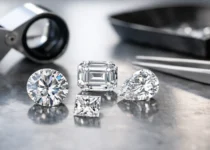
Shape matters too. Round diamonds usually cost more than fancy shapes like oval, cushion, princess, emerald, or pear. So if you are asking what is the price for 1 carat lab grown diamond, the answer for a round is usually not the same as the answer for an oval of the same weight.
It also helps to separate loose diamond pricing from finished ring pricing. A 1 carat lab-grown diamond might cost $1,500 on its own, but once you add a setting, side stones, taxes, and possible customization, the final ring price may land much higher.
Why prices vary so much
Carat weight is only one part of diamond pricing. Buyers often assume 1 carat is a fixed benchmark with a predictable price, but diamonds are priced based on a combination of quality factors.
Cut can change the value quickly
Cut is the biggest quality factor for beauty, especially in round diamonds. A well-cut 1 carat stone reflects light better and looks brighter, sharper, and more lively. That usually makes it more expensive.
This is one of the easiest places to make a smart trade-off. You should not overpay for high color and clarity if the cut is weak. A diamond with excellent cut and slightly lower clarity often looks better than a poorly cut diamond with cleaner specs on paper.
Color affects both look and price
Lab-grown diamonds are graded on the same color scale commonly used for natural diamonds, from D to Z. In general, D through F are considered colorless, G through J near-colorless, and lower grades show more warmth.
For many buyers, near-colorless grades like G or H offer a good balance. They can still face up white in many settings while costing less than D or E. Once you move into the colorless range, you are often paying more for a difference that may be subtle to the untrained eye.
Clarity matters, but not always as much as buyers think
Clarity grades measure internal and external characteristics. A flawless or VVS stone costs more, but most shoppers do not need that level of rarity in a lab-grown diamond.
The better goal is often an eye-clean diamond, meaning you cannot see inclusions without magnification during normal viewing. In many cases, VS1, VS2, or even SI1 can be a strong value if the diamond is clean-looking and the inclusions are not in obvious locations.
Certification changes confidence and pricing
A lab-grown diamond with a grading report from a respected lab often costs more than a similar-looking stone with weak or missing documentation. That premium is usually worth it because the certificate helps you verify that the stated color, clarity, cut, and carat weight are credible.
For online buyers, this matters even more. Certification gives you a standard way to compare one seller against another instead of relying only on marketing language.
Shape has a real impact on price
Round brilliant diamonds usually carry the highest price per carat because demand is strong and cutting them often wastes more rough material. Fancy shapes can be more affordable.
So if your budget is tight, choosing an oval, cushion, emerald, or pear shape may let you stay near the 1 carat mark without stretching as far. The trade-off is that shape changes appearance. Some fancy shapes look larger face-up than rounds of the same carat weight, which can be a bonus, but they also show color or inclusions differently depending on the cut style.
Is a 1 carat lab-grown diamond cheap or just cheaper?
This is an important distinction. Lab-grown diamonds are usually much cheaper than natural diamonds of comparable size and quality, but that does not automatically make every lab-grown diamond a bargain.
Some sellers price lab-grown diamonds fairly. Others leave room for large markups because many buyers are still learning how the category works. That means a 1 carat lab-grown diamond can be a strong value, but only if you compare similar stones carefully.
For example, paying $2,400 for a well-cut round with solid color and clarity may be reasonable. Paying the same amount for a weakly cut stone with inflated quality claims is not. The lower market price of lab-grown diamonds helps buyers, but it also makes comparison shopping even more important.
How to compare 1 carat lab-grown diamond prices intelligently
The safest way to compare prices is to hold the key quality factors as steady as possible. Look at diamonds with the same shape, similar cut grade, close color and clarity grades, and trusted certification. Once you do that, price differences become more meaningful.
You also want to check actual appearance, not just the grading report. High-resolution videos can reveal issues a certificate does not fully capture, such as poor light performance, dark areas, haziness, or an odd bow-tie effect in some fancy shapes.
If two diamonds seem nearly identical but one is much cheaper, pause before assuming it is the better deal. There may be a reason hidden in the visuals, the grading lab, or the seller’s policies.
The best value range for most buyers
For many engagement ring shoppers, the sweet spot is not the absolute lowest price and not the highest grade. It is usually a 1 carat lab-grown diamond with excellent or ideal cut, near-colorless grade, and eye-clean clarity.
That combination often gives you a diamond that looks bright and white without paying for specs that are hard to appreciate in everyday wear. In practical terms, many buyers find strong value in something like G-H color and VS1-VS2 clarity, though the exact right choice depends on shape and setting.
A halo setting, for example, can make the center stone look larger and brighter, which may reduce the need to chase top-tier grades. A simple solitaire exposes more of the diamond, so cut quality becomes even more important.
Common mistakes that raise the price unnecessarily
One common mistake is prioritizing carat weight over everything else. Many shoppers fixate on hitting exactly 1.00 carat, even when a 0.90 to 0.95 carat diamond may look almost the same once set and cost noticeably less.
Another is overbuying clarity. If a diamond is eye-clean, paying a large premium for microscopic purity may not improve what you actually see. The same goes for chasing the highest color grades without considering whether the difference is visible in the chosen setting.
A third mistake is trusting broad claims like premium quality or luxury grade without looking at the details. In a category where prices move fast and online listings can vary widely, specifics protect you.
Should you wait for prices to drop?
Lab-grown diamond prices have generally come down over time, but trying to time the market perfectly is not always practical. If you need a ring soon, the better approach is to shop carefully based on current value rather than guessing where prices will be months from now.
What matters more than catching the lowest possible market moment is avoiding overpayment today. A well-selected diamond at a fair current price is usually a better outcome than waiting indefinitely while feeling uncertain.
What is the price for 1 carat lab grown diamond if you want a smart buy?
If your goal is a smart purchase rather than a status-driven one, expect to spend around $1,200 to $2,200 for many strong 1 carat lab-grown options, especially in popular engagement ring quality ranges. You can spend less if you make thoughtful compromises on shape, color, or clarity. You can also spend more if you want a premium round with top specs.
The key is not finding the cheapest 1 carat lab-grown diamond. It is finding the one that gives you the best visible beauty for the money, backed by reliable grading and honest presentation. That is where confident buying starts.
A diamond purchase feels much less risky once you know which details change the look, which ones mostly change the price, and where a seller may be asking you to pay for something you will never actually notice.