Diamond Clarity Chart Explained Clearly
If you have ever stared at a grading report and wondered whether VS2 is meaningfully better than SI1, this diamond clarity chart explained guide is for you. Clarity sounds technical, but for most buyers the real question is simpler: will the diamond look clean, and are you paying extra for something you cannot see?
That is where many shoppers get tripped up. The clarity chart makes the grading scale look precise and absolute, but buying a diamond is rarely that neat. Two diamonds with the same clarity grade can look different in real life, and the right choice depends on size, shape, cut quality, and how closely you care to inspect it.
What the diamond clarity chart explained actually means
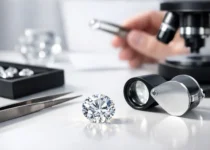
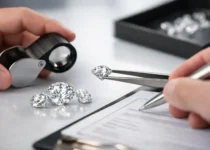
A diamond clarity chart ranks how visible a diamond’s internal and external characteristics are under 10x magnification. Internal marks are called inclusions. Surface marks are called blemishes. The fewer and less visible these features are, the higher the clarity grade.
Most grading reports use the GIA clarity scale, which runs from Flawless down to Included. On paper, the order is straightforward: FL, IF, VVS1, VVS2, VS1, VS2, SI1, SI2, I1, I2, and I3.
What matters for buyers is that these grades are not based on what the average person sees at normal viewing distance. They are based on a trained grader using magnification. That is why clarity is often one of the easiest areas to overspend on. You can pay a meaningful premium for a higher grade without getting a noticeable visual benefit.
Diamond clarity chart explained by grade
FL and IF
Flawless and Internally Flawless diamonds are exceptionally rare. FL has no visible inclusions or blemishes under 10x magnification. IF has no internal inclusions under 10x, though it may have tiny surface blemishes.
These grades carry prestige, not practical value for most online shoppers. In a mounted engagement ring, the visual difference between IF and a lower eye-clean grade is usually nonexistent. Unless rarity itself matters to you, these grades are often more about bragging rights than smart buying.
VVS1 and VVS2
Very Very Slightly Included diamonds have inclusions that are extremely difficult for a grader to see under 10x magnification. They are high-clarity stones and usually appear pristine to the naked eye.
VVS can make sense if you want peace of mind, are buying a larger diamond, or simply prefer a higher grade on the certificate. But from a value standpoint, many buyers can safely move lower without sacrificing visible beauty.
VS1 and VS2
Very Slightly Included diamonds have minor inclusions that are difficult to somewhat easy for a skilled grader to see under 10x. This range is often the sweet spot for buyers who want a clean-looking diamond without paying top-tier premiums.
VS1 is almost always a safe choice visually. VS2 is often eye-clean as well, especially in round diamonds, though it depends on the location and type of inclusion. This is one of the most practical clarity ranges for engagement ring buyers.
SI1 and SI2
Slightly Included diamonds have noticeable inclusions under 10x magnification. This category is where value shopping gets interesting, because some SI1 diamonds look excellent face-up while others do not.
SI1 can be a very smart buy if the stone is eye-clean. SI2 is more mixed. Some SI2 diamonds still look fine once set, but others show visible inclusions, haziness, or durability concerns. This is the range where you need to examine the actual diamond carefully instead of relying on the grade alone.
I1, I2, and I3
Included diamonds have inclusions that are obvious under magnification and often visible without magnification. In many cases, the inclusions affect transparency, brilliance, or durability.
These grades are usually not the best choice for an engagement ring if you want a bright, lively stone. The lower price can be tempting, but the trade-off is often visible flaws or reduced performance. For most buyers, this is where saving money starts to cost too much in appearance.
Why clarity grades do not tell the whole story
The biggest mistake shoppers make is treating clarity like a simple ladder where every step up is always better. It is better on the certificate, yes. But that does not always mean it is better for your eyes or your budget.
A diamond with one tiny crystal near the edge can receive the same grade as a diamond with several inclusions under the table. Those two stones may perform very differently visually. Location matters. Type matters. Size matters. Even color and cut can change how noticeable an inclusion feels once the diamond is viewed in person.
This is why the phrase eye-clean matters more than the chart for many buyers. Eye-clean generally means the diamond has no inclusions visible to the naked eye from a normal viewing distance. There is no universal lab standard for that term, which is frustrating, but it is still one of the most useful practical benchmarks when shopping online.
How shape affects clarity choices
Shape changes how forgiving a diamond is. Round brilliant diamonds hide inclusions better than most shapes because of their facet pattern and strong light return. That means buyers can often go lower in clarity with rounds and still get a clean-looking stone.
Step-cut diamonds, especially emerald and Asscher cuts, are less forgiving. Their large open facets make inclusions easier to spot. If you are considering one of those shapes, you may want to stay in the VS range or higher unless you can confirm the stone is eye-clean.
Oval, pear, and marquise diamonds sit somewhere in the middle. Some hide inclusions well, but elongated shapes can also show certain flaws more easily depending on where they fall. In these shapes, reviewing actual photos or videos is especially important.
Which inclusions are more concerning?
Not all inclusions carry the same risk. Small crystals or clouds may be harmless if they do not affect transparency. Feathers can also be fine, but their placement matters. If a feather reaches the surface in a vulnerable area, especially near a point or corner, it can raise durability concerns.
Needles and pinpoints are often minor. Twinning wisps can be acceptable too, depending on visibility. Large dark crystals under the table tend to be more distracting because they are easier to notice face-up.
This is one area where caution helps. A lower clarity diamond is not automatically a bad diamond, but it should be judged on the actual inclusion pattern, not just the label.
The best clarity range for most buyers
For many engagement ring shoppers, the best balance of appearance and value is usually VS2 to SI1. In round diamonds, an eye-clean SI1 can be an excellent buy. In step cuts, VS1 or VS2 is often the safer target.
That does not mean everyone should buy the same grade. If you are choosing a larger center stone, you may prefer the extra safety of VS1. If budget is tight and the diamond has strong cut quality, an eye-clean SI1 can free up money for better color, more carat weight, or a superior setting.
The practical order of priorities for most buyers is usually cut first, then eye-clean clarity, then color and size based on preference and budget. Clarity matters, but once the diamond looks clean, paying more often brings diminishing returns.
How to use the clarity chart when shopping online
The diamond clarity chart explained one part of the puzzle, but online buying requires a second step: verifying what the grade looks like in the real diamond.
Start with a respected grading report, ideally from GIA or AGS for natural diamonds. Then inspect high-resolution images and video if available. Look closely at the center of the stone, not just the edges. Check whether inclusions are dark, obvious, or concentrated under the table.
Pay attention to the shape. A round SI1 may be perfectly fine. An emerald-cut SI1 needs more scrutiny. If the seller describes a diamond as eye-clean, find out from what distance and viewing angle. Those details matter.
If you are comparing two stones, do not assume the higher clarity grade is the better purchase. A well-cut VS2 can easily be a smarter choice than a poorly cut VVS2. The goal is not the cleanest certificate. The goal is the best-looking diamond for your money.
A quick reality check before you pay more for clarity
Clarity is one of the easiest grading categories to misunderstand because it sounds more important than it often is. Most people will never inspect your diamond under 10x magnification. They will notice sparkle, brightness, and overall appearance.
That is why smart buyers use the chart as a filter, not a finish line. Narrow your options with clarity grades, then judge the actual stone. If it looks clean, bright, and beautiful to your eyes, you may already have all the clarity you need.
The best diamond purchase usually comes from knowing when to stop paying for paper upgrades and start focusing on what you can actually see.