How Are Fancy Colored Diamonds Graded?
If you have ever compared two pink or yellow diamonds online and wondered why one costs dramatically more than the other, the answer usually starts with grading. Understanding how are fancy colored diamonds graded can help you avoid overpaying, misreading a certificate, or assuming that all “yellow diamonds” or “pink diamonds” belong in the same value range.
Fancy colored diamonds are graded very differently from colorless diamonds. With a white diamond, buyers are usually looking for as little body color as possible. With a fancy colored diamond, the color itself is the feature being judged, and stronger or more appealing color can raise value significantly. That shift changes what matters on the grading report and how you should evaluate the stone.
How are fancy colored diamonds graded differently?
The biggest difference is the goal of the grading scale. For colorless diamonds, labs use the familiar D-to-Z scale, where D is colorless and increasing letters show more visible yellow or brown tint. That system stops once the color becomes strong enough to be considered a fancy color.
For fancy colored diamonds, labs focus on the character and strength of the visible color rather than the absence of it. Instead of asking, “How colorless is this diamond?” the lab asks, “What color is it, how strong is it, and how is that color distributed?”
This matters because a fancy colored diamond is not graded with a single simple letter. It is described through a combination of terms that capture hue, tone, and saturation. Those three factors work together to explain what the diamond actually looks like in person.
The three factors behind fancy color grading
Hue
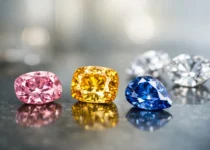
Hue is the basic color family the diamond shows. That might be yellow, pink, blue, green, orange, brown, gray, or another recognized color. Some diamonds also have a modifying color, which is why you may see descriptions such as brownish pink or orangy yellow.
The order of those words matters. In a term like brownish pink, pink is the dominant hue and brown is the modifier. In pinkish brown, brown is dominant and pink is secondary. That difference can have a major effect on desirability and price.
Tone
Tone refers to how light or dark the color appears. A diamond can show a very light pink, a medium yellow, or a dark greenish blue. Tone is not about brightness or vividness. It is about where the color falls on the light-to-dark range.
A tone that is too light may make the color look weak. A tone that is too dark can make the stone look inky or muddy. The best tone depends on the color and the overall appearance of the diamond. There is no universal “best” tone across all fancy colors.
Saturation
Saturation is the strength or intensity of the color. This is often the most important value driver in a fancy colored diamond. A stone with stronger, purer color usually commands more attention and, in many cases, a much higher price.
This is where grading terms like Fancy Light, Fancy, Fancy Intense, Fancy Vivid, Fancy Deep, and Fancy Dark come in. These labels describe how strong and visually rich the color appears when the stone is graded under controlled conditions.
What grading terms actually mean
When buyers read a grading report, the color grade can look confusing at first because it combines several ideas into one phrase. For example, a diamond might be graded as Fancy Intense Yellow, Fancy Light Pink, or Fancy Deep Blue-Green.
In simple terms, the intensity word tells you how forceful the color appears. “Fancy Light” suggests noticeable color, but not strong color. “Fancy” is stronger. “Fancy Intense” and “Fancy Vivid” usually describe richer, more saturated color. “Fancy Deep” and “Fancy Dark” can also be valuable, but they indicate a darker appearance rather than a brighter one.
This is where buyers need to slow down. A higher-sounding grade is not automatically better for every shopper. A Fancy Vivid yellow may be more valuable than a Fancy Light yellow, but it may also be more than your budget requires. If you love a softer pastel look, a lighter grade may actually suit you better.
How labs determine the grade
Professional grading labs evaluate fancy colored diamonds in controlled lighting and viewing conditions. They compare the diamond’s appearance against known standards and assess the face-up color presentation. This process is more nuanced than many buyers realize.
The lab is not only identifying the main color. It is also evaluating whether secondary colors are present, how evenly the color is distributed, how light or dark it appears, and how strong the saturation is. Even a subtle change in any one of these areas can shift the final grade.
Cut also plays a role in how color is perceived, although the grading itself is about observed color rather than cut quality alone. Some fancy colored diamonds are cut specifically to intensify color, sometimes at the expense of the proportions you might expect in a colorless diamond. That means a fancy colored diamond should not be judged by colorless-diamond standards alone.
Why cut still matters in fancy colored diamonds
Buyers often assume fancy color grading is only about the material’s natural color, but the cut can strongly influence what you see. Shape, depth, and facet arrangement can deepen or soften color appearance.
This is one reason radiant, cushion, and oval shapes are common in fancy colored diamonds. These cuts can help concentrate color and improve face-up appearance. A cutter may choose a shape that maximizes visible color rather than one that delivers the biggest spread or the most traditional cut performance.
That creates a trade-off. A diamond may carry a beautiful color grade but face up smaller for its carat weight because more weight is left in the depth to support color strength. For many buyers, that is a reasonable compromise. For others, especially online shoppers comparing dimensions, it can come as a surprise.
The lab report matters more than the seller’s description
If you are buying online, always separate marketing language from laboratory grading. A seller may call a diamond “canary yellow,” “champagne,” or “cognac,” but those are not always formal grading terms. Some are trade names used to make a stone sound more appealing.
What matters more is the grading report from a respected lab, especially for expensive fancy colored diamonds. The report gives you a standardized description that lets you compare stones more safely across sellers.
For consumer protection, this is one of the most important points. Fancy color value can jump quickly based on subtle grading differences. Without a reliable report, you are relying too heavily on a seller’s photography, editing choices, and marketing vocabulary.
Natural color vs treated color
Another key issue is whether the color is natural or the result of treatment. Fancy colored diamonds can be natural, and those are often far more valuable, especially in rare colors like pink, blue, and green. But diamonds can also be treated to change or enhance color.
That does not make treated diamonds fake. It does mean they belong in a different value category and should be priced accordingly. The grading report should clearly disclose whether the color origin is natural or treated.
This is an area where first-time buyers can make expensive mistakes. If a fancy colored diamond seems unusually affordable for its color and size, there is usually a reason. Sometimes the explanation is treatment. Sometimes it is a less desirable hue, a weaker saturation, or a noticeable brown or gray modifier that affects value.
Which colors are rarest and most expensive?
Not all fancy colors are priced the same, even at similar intensity levels. Natural pink, blue, and green diamonds are generally among the rarest and can be extremely expensive. Yellow diamonds are more available and often represent the most accessible entry point for buyers who want a natural fancy colored diamond.
Brown diamonds are usually less expensive, though that depends on appearance and branding. Orange and pure red diamonds are exceptionally rare. Even within the same color family, pricing can vary sharply based on whether the hue is pure or modified.
So if you are comparing two diamonds that both say “Fancy Intense,” do not assume they should cost anything close to the same amount. The actual hue, rarity, size, clarity, and market demand all matter.
What buyers should focus on before purchasing
A grading report is essential, but it is not the whole story. Fancy colored diamonds are visual purchases. Two stones with similar lab descriptions can still look quite different in real life, especially in how lively, even, or attractive the color appears.
That is why smart buyers look at three things together: the lab report, high-quality imagery or video, and the seller’s return policy. At Diamondseducator, the safest approach is always comparison-first thinking. Do not buy a fancy colored diamond based on the headline color name alone.
Pay attention to whether the color looks evenly distributed, whether modifiers help or hurt the appearance, and whether the stone’s dimensions make sense for the carat weight. If the diamond is natural and valuable, independent grading is not optional.
Fancy colored diamonds are graded by hue, tone, and saturation, but buying one well comes down to something even simpler: make sure the beauty you are paying for is documented, visible, and real.