Best Clarity Grades for Value
Paying for flawless clarity is one of the easiest ways to overspend on a diamond. For most buyers, the best clarity grades for value are not the highest grades on a lab report. They are the grades where the diamond still looks clean to the naked eye, but the price has not jumped just because the paperwork sounds impressive.
That distinction matters because clarity is often misunderstood. Shoppers see grades like FL, VVS1, or IF and assume higher always means better. Technically, yes. Financially, not always. In real buying situations, especially online, the smartest choice is usually the lowest clarity grade that still looks beautiful in normal viewing.
What clarity actually measures
Clarity refers to how many internal inclusions and external blemishes a diamond has, along with their size, position, and visibility. Grading runs from Flawless down to Included. The cleaner the diamond under magnification, the higher the grade.
Here is the broad scale most shoppers will see on a GIA report: FL, IF, VVS1, VVS2, VS1, VS2, SI1, SI2, and then I1 through I3. Those letters can make it seem like every step down is a major drop in beauty. Usually it is not.
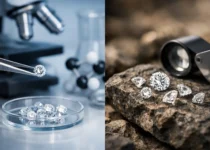
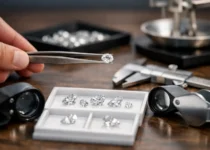
Most inclusions are judged under 10x magnification. That is the key point buyers need to keep in mind. You are not proposing with a loupe. You are buying a diamond to view with your eyes, in normal lighting, from a reasonable distance.
Best clarity grades for value: where smart buyers usually land
For most engagement ring shoppers, VS2 and SI1 are the sweet spots. In many cases, VS1 can also be a strong value if pricing is close. These grades often give you the best balance between appearance and cost.
A well-cut VS2 diamond is very often eye-clean. That means you cannot see inclusions without magnification. SI1 can also be eye-clean, but it requires more careful screening because some SI1 diamonds are clean-looking and some are not.
If you want the safest buying range without paying a premium for microscopic perfection, VS1 and VS2 are usually excellent places to focus. If budget matters and you are willing to compare individual stones more carefully, SI1 can offer outstanding value.
That is why the best clarity grades for value are rarely FL or VVS. You are paying for rarity and grading purity, not a visible improvement most people will ever notice.
Why higher clarity often means worse value
The price jump between clarity grades is not always matched by a visible difference. A VVS1 diamond may look identical to a VS2 diamond once it is mounted in a ring and worn day to day. Yet the VVS1 can cost meaningfully more.
This is where many first-time buyers get trapped. Retail language tends to reward the idea of buying “better” on paper. But clarity is not like choosing between a cracked windshield and a clean one. Many inclusions in lower grades are tiny, off to the side, or hidden under facets.
In other words, a diamond can be lower in clarity and still look completely beautiful. If the inclusion cannot be seen without magnification, paying more for an even cleaner grade may not improve what you actually see.
The best grade depends on shape
Clarity value is not identical across all diamond shapes. Shape changes how visible inclusions are.
Round brilliant diamonds are the most forgiving. Their facet pattern hides inclusions well, which means buyers can often shop a little lower in clarity. That is one reason SI1 can be especially appealing in rounds.
Step-cut diamonds such as emerald and Asscher cuts are less forgiving. Their large open facets act like windows, making inclusions easier to spot. In those shapes, many buyers are better off staying in the VS1 to VS2 range, and sometimes higher depending on the stone.
Oval, pear, marquise, and cushion cuts fall somewhere in the middle. Some hide inclusions nicely, while others show them more clearly depending on where the inclusion sits. A black crystal near the center is more concerning than a white feather near the edge.
This is why there is no single perfect answer for every diamond. The best clarity grades for value depend partly on how the shape handles visibility.
Size changes the equation too
As carat weight goes up, inclusions are often easier to notice. A 0.70 carat SI1 may look perfectly clean, while a 2.00 carat SI1 may show more readily simply because everything is larger.
That does not mean bigger diamonds need elite clarity grades. It means buyers should be more selective. If you are shopping for a larger center stone, especially over 1.50 carats, it can make sense to lean toward VS2 instead of SI1 unless you have high-quality images or expert confirmation that the SI1 is eye-clean.
The same logic applies to very close viewing. Engagement rings are examined from short distances. Earrings and pendants are usually viewed from farther away, so you can often go lower in clarity there without any issue.
Eye-clean matters more than the grade alone
“Eye-clean” is one of the most useful concepts in diamond buying, but it is also one of the most inconsistently used. Some sellers define eye-clean from six inches away, others from ten inches, and some only face-up. That means you should not treat the term as universal.
Still, the idea is sound. A diamond that looks clean to your eye offers the appearance most buyers want, without forcing them into unnecessarily expensive grades.
This is especially relevant online. A lab grade tells you the category, but not the full story of whether a specific diamond is a smart buy. Two SI1 diamonds can perform very differently. One may look spotless. Another may have a dark inclusion under the table that is easy to see.
That is why good images, magnified videos, and inclusion maps matter. The clarity grade is the starting point, not the final decision.
When SI1 is a great deal, and when it is not
SI1 is often the most tempting value grade because it can offer noticeable savings over VS2 while still appearing eye-clean. But it is also the grade where buyers need to slow down.
A strong SI1 diamond usually has inclusions that are small, light-colored, near the edge, or hidden by the cut pattern. Those can be excellent buys.
A weaker SI1 may have a dark crystal in the center, a group of inclusions that affect transparency, or something obvious in a shape that does not hide clarity well. In those cases, the lower price is not really a bargain.
If you are not comfortable evaluating magnified imagery, VS2 is often the easier and safer value choice. It typically gives you strong visual cleanliness with less risk.
When paying up for higher clarity makes sense
There are situations where moving above VS2 is reasonable. If you are buying a step-cut diamond, a large stone, or a diamond where you are especially sensitive to inclusions, VS1 or even VVS2 might fit your priorities.
Some buyers also simply enjoy owning a higher grade. That is not wrong. It only becomes a problem when someone is told they need ultra-high clarity for beauty, when what they really need is a clean-looking diamond and a balanced budget.
If boosting clarity forces you to compromise on cut quality, that is usually a mistake. Cut has a bigger impact on sparkle and overall beauty than moving from VS2 to VVS1.
A practical buying range for most shoppers
If you want a simple rule of thumb, start with VS2 for round diamonds and consider SI1 if it is confirmed eye-clean. For emerald and Asscher cuts, begin around VS1 or VS2. For larger diamonds or elongated fancy shapes, stay open-minded but inspect SI1 options carefully.
That approach protects you from paying for invisible purity while also avoiding the disappointment of obvious inclusions. It is the kind of middle-ground thinking that helps shoppers make better online comparisons.
At Diamondseducator, this is where clarity becomes less about chasing the highest grade and more about buying intelligently. The best diamond is not the one with the fanciest report line. It is the one that looks beautiful, fits your budget, and leaves no room for regret after the return window closes.
If you remember one thing, let it be this: buy what your eyes can appreciate, not what magnification can brag about.