Engagement Ring Budget Guide: What to Spend
A lot of buyers do not start with the diamond. They start with a number they are nervous to say out loud.
That is exactly why an engagement ring budget guide matters. Before you compare carat weight, diamond shape, or natural versus lab-grown options, you need a spending range that fits your finances and your priorities. Without that, it is easy to get pulled into marketing rules, oversized expectations, or a ring that looks good on paper but feels bad on your credit card statement.
How to set an engagement ring budget guide that fits real life
Forget the old salary formulas. They were built for selling rings, not protecting buyers.
A smart engagement ring budget guide starts with what you can comfortably pay without disrupting bigger financial goals. If paying for the ring means carrying high-interest debt, draining your emergency fund, or delaying a move, wedding, or travel plans you care about, the budget is too high. An engagement ring should be meaningful, but it should not create financial stress before the marriage even begins.
For most buyers, the better question is not, “How much should I spend?” It is, “What can I spend and still feel good about six months from now?” That number is usually more honest and more useful.
Start with a realistic range instead of one fixed number. A budget of $3,000 to $4,000 gives you room to compare options without feeling boxed in. It also helps when one choice gives you better overall value, like a slightly smaller diamond with a much better cut grade, or a lab-grown diamond that allows you to move up in size without a major jump in cost.
What actually drives the price of an engagement ring
Most of your budget goes to two things: the center stone and the setting. But within those categories, a few details move the price more than buyers expect.
Diamond type changes the budget quickly
Natural diamonds usually cost more than lab-grown diamonds of similar size and quality. That does not automatically make one better for every shopper. It depends on what matters most to you.
If your priority is maximum size for the money, lab-grown often stretches a budget much further. If your priority is owning a naturally formed diamond and you are comfortable with the premium, then a natural stone may still be the right choice. The key is knowing that this one decision can reshape your entire budget before you even get into the 4Cs.
Cut quality affects beauty more than size
Buyers often focus on carat first because it is visible and easy to compare. The problem is that carat weight alone does not tell you how bright or lively the diamond will look.
A well-cut diamond can appear more brilliant than a larger stone with weak proportions. If your budget is limited, protecting cut quality is usually smarter than stretching for extra size. This is one of the most common trade-offs in ring shopping, and it is worth getting right.
Shape has a real pricing impact
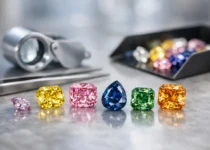
Round brilliant diamonds often cost more than fancy shapes like oval, pear, cushion, or emerald cut. If you love the look of a non-round shape, your budget may go further than you think.
Some shapes also face up larger for their carat weight, which can create the visual effect many buyers want without paying round-diamond prices. That said, each shape has its own cut considerations, so cheaper does not always mean better value.
The setting can quietly add a lot
A simple solitaire setting keeps more of your budget available for the center stone. Once you move into pavé bands, halos, hidden halos, side stones, custom details, or platinum, the setting price can rise fast.
This is where many budgets drift. A buyer chooses a diamond that seems affordable, then pairs it with a setting that adds much more than expected. If the center stone is your priority, lock in a setting budget early.
A practical way to divide your budget
There is no perfect formula, but a useful starting point is to allocate most of the budget to the center stone and keep the setting proportionate. In many cases, that means roughly 70 to 85 percent on the diamond and 15 to 30 percent on the setting.
That ratio shifts depending on style. A classic solitaire usually leaves more room for the stone. A design-heavy setting with accent diamonds may justify a larger share of the budget. The important part is intentional spending. If you do not decide where your money should go, the retailer will often decide for you.
It also helps to separate emotional priorities from visual priorities. Some buyers care most about having a natural diamond, even if it means going smaller. Others care most about finger coverage and overall look, which may make lab-grown or a fancy shape the better fit. Neither is wrong. Problems usually happen when buyers pay for features they do not actually value.
Budget ranges and what they can realistically buy
Prices vary by market conditions, retailer markup, and quality combinations, so no budget chart is universal. Still, some broad expectations can keep you grounded.
At lower budgets, buyers often get the best results by choosing a simple setting and being flexible on shape or diamond type. With a moderate budget, there is usually more room to balance size, cut, and setting style without major compromise. At higher budgets, shoppers have more freedom, but overpaying is still possible, especially online where impressive listings can hide weak cut quality or inflated pricing.
This is why comparison shopping matters. Two diamonds with the same lab report basics can perform very differently in real life, and two rings with similar photos can be priced very differently depending on the retailer.
How to avoid overpaying online
Online shopping can offer better pricing and selection, but it also requires more discipline. You cannot rely on store lighting or sales language. You need to compare the details that affect actual value.
Start with a grading report from a respected lab, especially GIA for natural diamonds. For lab-grown, report quality and consistency still matter. Then look beyond the headline specs. Cut information, proportions, videos, return policy, and setting quality all affect whether a ring is worth the price.
Be careful with listings that look unusually cheap. Sometimes the explanation is harmless, like a less popular shape or lower color grade. Other times, it points to weak cut quality, poor transparency, or a seller who is counting on buyers not knowing what to check.
If you are choosing between several options, do not ask only which one is bigger. Ask which one gives you the best mix of visual performance, documentation, and long-term satisfaction for the price.
Common budget mistakes buyers make
One mistake is setting the budget after browsing rings instead of before. That tends to anchor you to aspirational pricing, not realistic spending.
Another is overspending on carat while accepting weak cut quality. A larger diamond that looks dull is not a smart upgrade. The same goes for paying a premium for color or clarity grades that are technically higher but not visibly better once the ring is worn.
Some buyers also ignore the full purchase cost. The ring price is not always the final number. Sales tax, shipping, insurance, resizing, and setting upgrades can push the real total higher than expected.
Then there is the pressure factor. Friends, social media, and outdated spending rules can make buyers feel that a ring has to hit a certain dollar amount to be meaningful. It does not. A ring is a symbol of commitment, not a public accounting exercise.
When it makes sense to spend more
Sometimes increasing the budget is reasonable. If moving up slightly gets you a clearly better cut, a more durable setting, or a diamond type you strongly prefer, the added cost may be worth it.
The question is whether the upgrade changes your actual satisfaction or just your spec sheet. Spending more for visible beauty, better craftsmanship, or a meaningful personal preference can make sense. Spending more because a salesperson nudged you into a higher bracket usually does not.
This is where education protects you. Diamondseducator exists for exactly this kind of decision: helping buyers tell the difference between a smart upgrade and an expensive distraction.
A good budget is one you can explain to yourself
If your budget is based on your finances, your partner’s style, and the features that truly matter to you, it is probably a solid budget. If it is based on pressure, vague rules, or fear that cheaper automatically means less meaningful, it is worth revisiting.
A well-bought engagement ring is not the most expensive one you can reach for. It is the one that gives you confidence in both the purchase and the person you are making it for.
Set the number first, protect the qualities that matter most, and let the ring fit your life – not the other way around.
One Comment