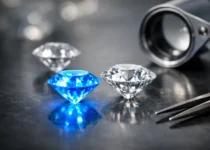
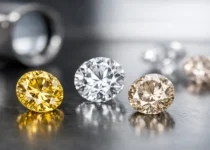
How Diamond Cut Affects Sparkle
You can look at two diamonds with the same carat weight, color, and clarity and still see a big difference in brilliance. That gap usually comes down to cut. If you’re wondering how diamond cut affects sparkle, this is the part of diamond quality that most directly changes what your eye actually sees.
That matters even more when you’re shopping online. A grading report can tell you a lot, but it will not fully prepare you for how lively or dull a diamond appears once light hits it. Buyers often spend too much attention on clarity grades or tiny color differences, while the cut is what makes a diamond look bright, crisp, and full of life.
Why cut matters more than most buyers expect
Cut is not the same thing as shape. Shape means round, oval, cushion, princess, and so on. Cut refers to how well the diamond’s proportions, angles, symmetry, and polish work together to return light.
A well-cut diamond acts like a carefully designed system of mirrors. Light enters the stone, bounces around internally, and then returns to your eye. When the cut is poor, much of that light leaks out through the sides or bottom instead of coming back up through the top. The result is a diamond that can look watery, dark, or lifeless even if the color and clarity are strong.
This is why cut is often considered the most important of the 4Cs for beauty. A slightly lower color or clarity grade can still look great in a well-cut diamond. A poorly cut diamond usually cannot be rescued by high grades elsewhere.
How diamond cut affects sparkle in real life
When people say a diamond sparkles, they usually mean a mix of three visual effects: brightness, fire, and scintillation.
Brightness is the white light reflected back from the diamond. Fire is the rainbow-colored flashes you see when light disperses. Scintillation is the pattern of sparkle and contrast you notice when the diamond moves or when you move around it.
A strong cut improves all three, but not always in the exact same way. Some diamonds emphasize bright white return. Others show more colored flashes. Some have sharp on-off sparkle that looks crisp and lively. This is one reason buyers can prefer one diamond over another even when both receive solid grading.
The key point is simple: sparkle is not random. It is a result of light performance, and light performance is heavily shaped by cut quality.
What parts of cut create more sparkle?
Several cut factors influence how much sparkle you see and what kind of sparkle you get.
Proportions
Proportions include the table size, depth percentage, crown angle, and pavilion angle. These measurements control how light travels through the diamond.
If a diamond is too deep, light may escape from the sides. If it is too shallow, light may leak out the bottom. If the crown and pavilion angles are not working together properly, the diamond may lose brightness or look uneven. This is why two diamonds with the same overall cut grade can still perform differently.
Symmetry
Symmetry refers to how precisely the facets line up and mirror each other. Good symmetry helps create a balanced pattern of light return. Poor symmetry can reduce visual precision and make the sparkle look less organized.
This does not mean every buyer needs the absolute top symmetry grade. In many cases, Very Good symmetry is visually close to Excellent. But once symmetry becomes weaker, the stone can start to lose some of the clean, crisp appearance buyers usually want.
Polish
Polish measures how smooth the diamond’s facet surfaces are. Better polish helps light move cleanly through the stone. Minor polish differences are often hard to see without magnification, so this is not usually the first factor to prioritize. Still, it supports the overall look.
Facet arrangement
The pattern and number of facets also affect sparkle. Round brilliant diamonds are known for strong light return because their facet design is built for brilliance. Fancy shapes can also be beautiful, but they often show sparkle differently. An oval may have broader flashes. An emerald cut tends to show more flashes of light and contrast than pinfire sparkle.
Cut grade and what it really tells you
If you’re buying a round diamond with a GIA report, you’ll usually see a cut grade such as Excellent, Very Good, Good, Fair, or Poor. This is helpful, but it is still a broad category.
An Excellent cut grade is generally the safest place to start if sparkle is your priority. But not every Excellent-cut diamond performs equally well. Some are near the edge of the acceptable range. Others are much stronger within that same grade.
Very Good cut can sometimes offer strong value, especially if the diamond still has favorable proportions and looks bright in images or video. Good, Fair, and Poor cuts are where risk increases. A lower price may look tempting, but the diamond can appear noticeably less lively.
For first-time buyers, this is one of the easiest mistakes to make online. A diamond may look similar on paper, but the light performance can be very different. That’s why cut deserves extra attention before you compare small differences in clarity or color.
Why shape changes the kind of sparkle you see
When buyers ask how diamond cut affects sparkle, they are often really comparing shapes without realizing it.
Round brilliant diamonds usually produce the most intense overall sparkle. Their facet structure is designed to maximize light return, which is why they remain the benchmark for brilliance.
Fancy shapes can still be excellent choices, but they do not all sparkle the same way. Oval, pear, and marquise diamonds can have strong brilliance, though they may also show areas of reduced light performance if cut poorly. Cushion cuts vary a lot – some have chunky flashes, while others look more crushed-ice and splintery. Emerald and Asscher cuts have a hall-of-mirrors effect with broader flashes and more transparency, which many buyers love, but they do not sparkle like rounds.
This is not a flaw. It is a style difference. The best shape depends on what kind of visual look you prefer.
The trade-off buyers should understand
Better cut quality often means paying more, especially in round diamonds. That can make buyers wonder whether the premium is worth it.
Usually, yes – within reason. Cut affects what you will notice every day. A one-grade drop in clarity may be invisible to the naked eye. A small color difference may also be hard to detect once the diamond is set. But weaker cut performance is often easier to see right away.
That said, there is a practical middle ground. You do not always need the most expensive top-tier option to get a beautiful diamond. A well-chosen diamond with Excellent or strong Very Good cut quality can outperform a more expensive stone with better clarity but weaker cut. This is where educated shopping matters most.
How to shop for sparkle online without getting misled
Online buyers need to be careful because sparkle is partly visual, and certificates only tell part of the story.
Start by prioritizing cut over overly strict clarity targets. For round diamonds, focus first on Excellent cut. Then review the actual proportions if available. Look at videos, not just still photos, because movement reveals brightness and scintillation better than static images.
If you’re considering a fancy shape, be even more selective. Many fancy shapes do not receive a formal overall cut grade from GIA, so you need to rely more on images, facet pattern, and visible light return. Dark zones, flat-looking centers, or obvious windowing can be warning signs.
It’s also smart to compare several diamonds side by side. Once you do that, cut differences become easier to spot. A diamond with better cut often looks sharper and brighter even before you know its grading details.
For shoppers using educational resources like Diamondseducator, this is where learning a few cut basics can save real money. It helps you avoid paying for paper grades that do less for actual beauty than a stronger cut would.
A better question than “Is it a good diamond?”
Instead of asking whether a diamond is good on paper, ask whether it returns light well enough to look beautiful in normal life. Jewelry store spotlights can make many diamonds look lively. Everyday lighting is less forgiving.
A well-cut diamond will still look bright in office light, near a window, at dinner, or outdoors in changing conditions. That is the kind of performance worth paying for. Sparkle is not just a luxury detail. It is the visible payoff of a diamond cut well enough to do its job.
If you’re trying to make a smart buying decision, remember this: the diamond that looks more alive is often the better buy, even if another stone has slightly higher grades elsewhere.