Diamond Cut Grading Guide for Smart Buyers
A diamond can look dull on paper and still catch your eye online, or it can carry strong grades and somehow feel flat once you see the video. That gap is exactly why a diamond cut grading guide matters. Cut is the part of diamond quality that most directly affects sparkle, brightness, and life, yet it is also the grade many shoppers misunderstand.
If you are buying online, this matters even more. You cannot rely on a jewelry counter spotlight or a sales pitch. You need to know what a cut grade actually tells you, what it leaves out, and how to use it with the rest of the grading report so you do not overpay for a diamond that looks weaker than expected.
What a diamond cut grade really measures
Cut grade is not the same thing as diamond shape. Round, oval, cushion, and princess are shapes. Cut grade is an assessment of how well a diamond’s proportions, facet arrangement, symmetry, and polish work together to handle light.
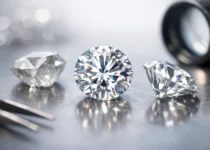
When cut is strong, light enters the diamond and returns to your eye in a lively way. You see brightness, fire, and scintillation. Brightness is the white light coming back to you. Fire is the colored flashes. Scintillation is the pattern of sparkle you notice as the diamond or your hand moves.
That is why cut is often the most important of the 4Cs for visual beauty. A diamond with a slightly lower color or clarity grade can still look impressive if the cut is excellent. The reverse is also true. A high-color, high-clarity diamond with weak cut proportions can look lifeless.
Diamond cut grading guide: who assigns the grade?
The cut grade you see depends on the lab. For most online buyers, the two names that matter most are GIA and AGS, although AGS grading is now part of the GIA landscape through industry changes. In practical shopping terms, GIA is the report many buyers will see most often.
For round brilliant diamonds, GIA uses cut grades ranging from Excellent to Poor. Those grades are based on a combination of proportion sets and finish factors such as symmetry and polish. A round diamond with a GIA Excellent cut grade has passed within a broad top tier, but that does not mean every Excellent-cut round performs equally.
That last point is where many shoppers get tripped up. “Excellent” sounds final, but it is really a category, not a guarantee that the diamond is one of the best-looking stones available.
Fancy shapes such as oval, emerald, pear, marquise, and cushion usually do not receive an overall cut grade from GIA. They still have measurements, polish, and symmetry listed on the report, but not a single cut score. That means buyers need to judge fancy shapes more carefully using proportions, videos, and visible light performance.
Why two Excellent diamonds can look different
This is one of the most useful things any buyer can learn. A lab cut grade is valuable, but it is not the full story.
Within GIA Excellent, there is room for different combinations of table size, depth, crown angle, pavilion angle, lower girdle facets, and star facets. Some combinations produce stronger light return than others. Two diamonds can both be graded Excellent and still differ in brightness, contrast pattern, and edge-to-edge performance.
This does not mean the lab grading is wrong. It means the lab is grading within a range. If your goal is simply to avoid bad cut, GIA Excellent is a strong starting point. If your goal is to find a diamond with exceptional visual performance, you need to go beyond the headline grade.
That is especially important online, where price differences between two “similar” diamonds can be substantial. Sometimes the cheaper one is the better deal. Sometimes the lower price reflects weaker proportions hiding inside the same top cut category.
The proportions that deserve your attention
For round diamonds, proportions matter because they shape how light travels through the stone. You do not need to become a gemologist, but you should know which measurements deserve a second look.
Table percentage is the width of the table facet relative to the diamond’s overall width. Depth percentage measures the diamond’s height relative to width. Crown angle and pavilion angle are especially important because they influence how light enters and exits the diamond.
Many attractive round diamonds fall into a narrower sweet spot than the full GIA Excellent range. Buyers often do well focusing on balanced proportions rather than chasing the largest spread or the cheapest price per carat.
As a practical filter, many experienced shoppers start with round diamonds that have table percentages around 54 to 58 and depth around 61 to 62.5, then review crown and pavilion angles more closely. That is not a law, and beautiful diamonds can fall outside those numbers. It is simply a helpful starting range.
For fancy shapes, proportions are even more shape-specific. An oval has different visual issues than an emerald cut. A pear can have a bow-tie effect. A princess cut can hide weight in depth. This is where a universal rule breaks down, and where videos matter much more.
Cut grade vs polish and symmetry
Buyers often see polish and symmetry listed separately and wonder if they should pay heavily for top marks in both. Usually, no.
Polish refers to the quality of the facet surfaces. Symmetry refers to how precisely the facets align and how consistently the shape is executed. These are part of overall finish, and they do matter. But once you are in the Very Good to Excellent range, the visual difference is often minor compared with the effect of core proportions and light return.
That means a round diamond with Excellent cut, Very Good polish, and Excellent symmetry can still be a strong choice. Paying a premium just to move every finish line to Excellent is not always the smartest use of budget.
Why cut should shape your budget decisions
If you are trying to balance the 4Cs, cut is usually the one to protect first. That does not mean you should overspend blindly on the highest possible grade. It means you should be more cautious about sacrificing cut than sacrificing color or clarity.
For example, many buyers will get more visible beauty by choosing a well-cut diamond in a near-colorless range rather than stretching for a higher color grade with weaker cut. The same goes for clarity. A clean-looking VS2 or SI1 with strong cut can easily outperform a higher-clarity diamond that returns light poorly.
This is one of the most consumer-friendly ways to shop smarter online. You are prioritizing what your eyes actually notice instead of paying for paper prestige alone.
How to use a diamond cut grading guide when shopping online
Start with a reputable grading report. For round diamonds, GIA Excellent is a strong first filter. Then look at the actual proportions, not just the summary grade. If the proportions appear promising, review high-quality video and magnified imagery.
Ask yourself whether the diamond looks bright across the whole face-up view. Does it have lively contrast, or does the center seem dark? Are the edges bright, or do they leak light? If you are comparing several stones with similar stats, this step often reveals the difference faster than the certificate alone.
For fancy shapes, be even more cautious. Since there is usually no overall lab cut grade, the seller’s video becomes essential. You are looking for a balanced outline, pleasing faceting, and light return that feels even rather than patchy. Some shapes naturally show a bow-tie, especially ovals and pears, but it should not dominate the center.
It also helps to compare spread. A diamond can weigh more because it is cut deep, not because it looks larger from the top. If two diamonds have the same carat weight but one faces up smaller, you may be paying for hidden weight that does little for appearance.
Common mistakes buyers make with cut grading
One mistake is assuming cut grade and shape are the same thing. Another is trusting any diamond labeled “ideal” without checking which lab or seller is using that term. Some sellers use marketing language more loosely than grading labs do.
A third mistake is overvaluing precision on paper while ignoring how the stone actually looks. Numbers matter, but they do not replace visual review. The opposite mistake happens too – falling for video sparkle without checking the report. Lighting can flatter a weak diamond.
The safest approach is to use both. Let the certificate screen for quality boundaries, and let images and video confirm whether the diamond performs the way the paper suggests.
At Diamondseducator, that buyer-first mindset is the whole point. The goal is not to memorize grading jargon. It is to make a calmer, better-supported purchase when the stakes are high.
So what cut grade should you buy?
For round diamonds, most online shoppers should begin with Very Good or Excellent, with Excellent usually offering the safest path if the price difference is reasonable. If budget is tight, a carefully chosen Very Good can sometimes represent good value, but this is where closer review becomes essential.
For fancy shapes, there is no single grade to target, so the answer depends on the shape and the actual stone. That can feel less convenient, but it also creates opportunity. Buyers who know how to read the report and judge visual performance can sometimes find excellent-looking fancy shapes at better prices because the market is less standardized.
The most useful way to think about cut is simple: it is the quality factor that turns a diamond from technically acceptable into visually exciting. If you protect that part of the decision, the rest of your budget tends to work harder for you.
When you are down to a few options, slow down and trust the combination of grading data and what your eyes see. A good diamond purchase rarely comes from chasing the highest numbers across the board. It comes from understanding which numbers actually change what you see every day.