How to Choose Diamond Carat Smartly
A lot of buyers fixate on one number before they understand what that number really buys. If you are wondering how to choose diamond carat, the right answer is not “buy the biggest one you can afford.” Carat affects price and appearance, but it only makes sense when you look at it alongside cut, shape, finger size, and the setting you plan to wear every day.
What diamond carat actually means
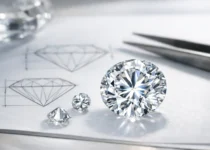
Carat is a weight measurement, not a direct measurement of size. One carat equals 200 milligrams. That matters because two diamonds with the same carat weight can look different in face-up size depending on how they are cut and what shape they are.
This is where many online shoppers get tripped up. They assume a 1.00 carat diamond will always look noticeably larger than a 0.90 carat diamond, or that a higher carat automatically means a better diamond. Neither is necessarily true. A poorly cut diamond can carry weight where you do not see it, such as in extra depth, while a well-cut diamond can look brighter and sometimes larger to the eye.
How to choose diamond carat without overpaying
Start with budget, but do not stop there. Carat has a strong effect on price because shoppers tend to target popular milestone weights like 0.50, 1.00, 1.50, and 2.00 carats. Prices often jump at those marks, even when the visual difference from a slightly lower weight is small.
For example, a 0.90 carat diamond can look very close in size to a 1.00 carat diamond, especially once it is set. The price difference, however, can be significant. The same pattern often shows up at 1.40 versus 1.50 carats, or 1.90 versus 2.00 carats.
If value matters, and for most buyers it should, consider shopping just under these benchmark sizes. You may be able to put that savings toward a better cut grade, which usually has a bigger effect on beauty than a tiny increase in carat weight.
Carat should not be chosen in isolation
A diamond is not a stat sheet. Buyers sometimes narrow their search to carat first and then compromise too much on cut, color, or clarity to stay within budget. That often leads to disappointment because the diamond may be larger on paper but less lively in person.
If you are buying online, cut quality deserves special attention. A smaller diamond with excellent cut can appear more brilliant, more balanced, and more attractive than a heavier stone with mediocre proportions. Carat gets attention, but cut is what gives the diamond life.
The best carat size depends on finger size and setting
One of the most practical ways to think about carat is visual proportion. The same diamond can look larger on a size 4 finger than on a size 8 finger. A thin band can also make the center stone appear bigger, while a wide band may make it feel more modest.
Setting style changes the look too. A halo setting can make a center diamond appear larger because the surrounding small diamonds add visual spread. An elongated shape in a simple solitaire can also create more finger coverage than a round diamond of the same weight.
This is why there is no universal “best” carat size. A 1 carat diamond may look substantial and balanced in one ring design and more understated in another. When choosing carat, always picture the full ring, not just the loose diamond listing.
Shape changes how large a diamond looks
Shape has a major impact on face-up appearance. Round diamonds are the most popular, but they often look slightly smaller than some fancy shapes of equal carat weight because more weight is distributed inward rather than across length and width.
Oval, pear, marquise, and emerald cuts often look larger per carat because of their elongated outlines. If your goal is maximizing visible size without paying for a much heavier diamond, shape can help you do that.
That does not mean fancy shapes are automatically the better deal. Some show inclusions or color more easily, and some require close attention to length-to-width ratio and bow-tie appearance. But if you are comparing diamonds mainly by how big they look on the hand, shape deserves as much attention as carat.
Carat and cut quality work together
This is where smart shoppers separate themselves from overwhelmed shoppers. Carat tells you how much the diamond weighs. Cut tells you how effectively it returns light. When buyers chase carat at the expense of cut, they often end up with a diamond that looks dull or smaller than expected.
A deep-cut round diamond may weigh 1.00 carat but face up more like a smaller stone because too much of the weight is hidden in the depth. A well-cut 0.90 carat round can sometimes look close in diameter while offering better sparkle and lower cost.
For many engagement ring buyers, that trade-off is worth making. If your budget has limits, protecting cut quality usually gives you the better result than stretching for a milestone carat weight.
When bigger carat makes sense
There are situations where prioritizing carat is reasonable. If the wearer strongly prefers a bold look, has a larger ring size, or wants a minimalist solitaire where the center diamond does all the visual work, moving up in carat may matter more.
It can also make sense if you are comparing lab-grown diamonds, where price per carat is often much lower than natural diamonds. In that case, some buyers find they can reach a larger size without making major quality compromises. The key is still balance. A larger diamond should not come with obvious visibility issues, weak cut performance, or proportions that make it look heavy rather than elegant.
Practical carat ranges for different priorities
Most buyers do better when they think in ranges instead of one fixed number. If you want a classic, balanced engagement ring look, the range from about 0.70 to 1.20 carats is often a practical place to start. It offers visible presence without forcing every buyer into premium pricing tiers.
If budget is tight, diamonds just under major thresholds are often the sweet spot. If visible size is the top priority, elongated shapes and smart settings may help you stay in a lower carat range without sacrificing look. If long-term symbolism matters to you, a milestone weight like 1.00 or 2.00 carats may still be worth the premium, but it should be a conscious choice rather than a default one.
Mistakes to avoid when choosing diamond carat
The most common mistake is treating carat as the main indicator of value. It is only one part of value. Another mistake is assuming all same-carat diamonds look the same. They do not. Cut proportions, shape, and setting can create a very different visual result.
Buyers also get into trouble by shopping to a social benchmark rather than a personal one. A diamond that photographs well on social media is not always the smartest buy for your budget or taste. What matters is whether the diamond looks beautiful to you, fits your financial comfort zone, and holds up to close comparison.
One more caution for online shopping: always review the actual measurements, not just carat weight. Millimeter dimensions tell you more about face-up size than the carat number alone. This is especially useful when comparing stones near the same weight.
A simple way to decide
If you feel stuck, narrow your decision in this order. First, decide the total budget for the ring. Second, choose the shape and setting style because those affect apparent size. Third, prioritize cut quality. Only then should you decide how much carat weight makes sense within what remains.
That order protects you from the most expensive mistake, which is paying for weight that does not translate into beauty or presence. For many buyers, the best choice is not the largest diamond on the page. It is the one that looks balanced, bright, and worth its price when all the details are considered together.
Diamond buying gets easier when you stop chasing a magic number. Carat matters, but the smartest purchase is the one that fits your eyes, your budget, and the way the ring will actually be worn.